Architecture · AI Architecture for B2B Sales
AI Architecture for B2B Sales
Part 1. Treat AI Like a Clever but Naive Salesperson
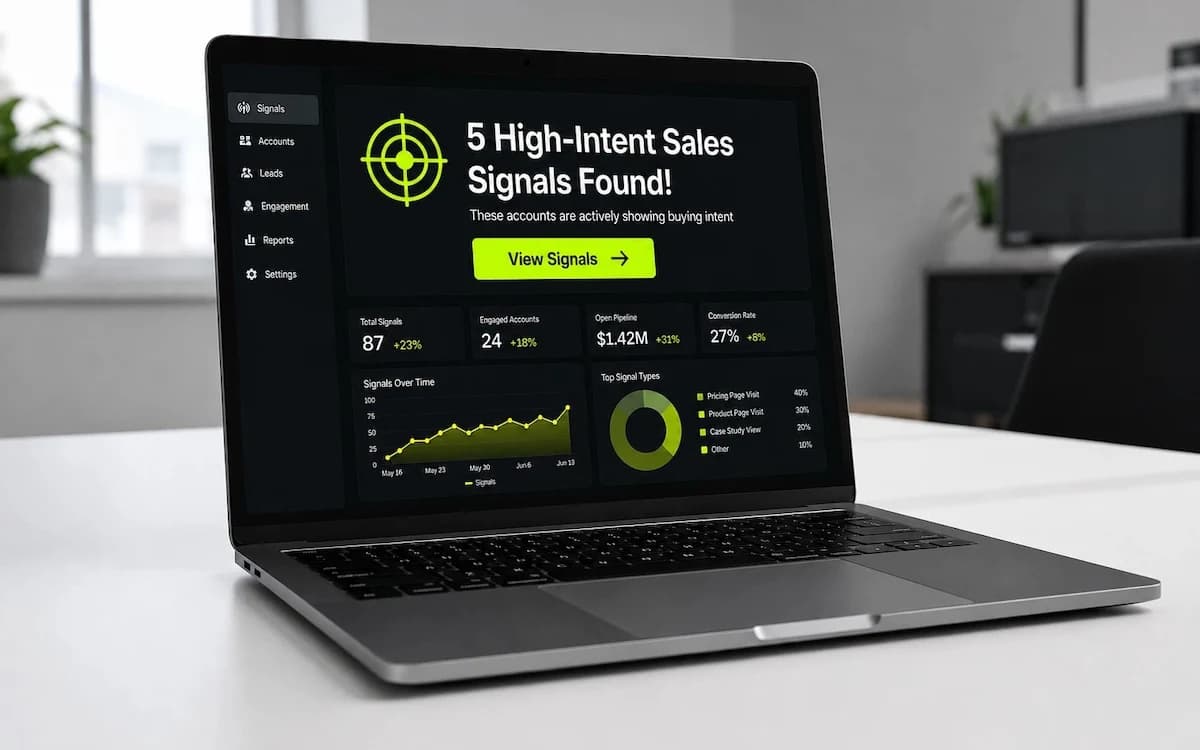
The Challenge of Today's Sales Team
Every sales team wants the same thing: fewer wasted calls, more real conversations.
However, in practice, most teams get the opposite:
- Hours spent researching accounts just to check for any buying signal
- Drafting outreach emails from scratch, every time
- No signal today doesn't mean no signal tomorrow. Accounts have to be checked again and again, not just once
That's a lot of effort. But more hard work doesn't necessarily mean better results. Here's where the current outreach trend actually stands:
- 73% of B2B buyers actively avoid suppliers who send irrelevant outreach (Sopro B2B Outreach Report, 2026)
- Only 3.4% of B2B cold emails get a reply in 2026, down from roughly 5% just two years ago (Instantly 2026 Cold Email Benchmark Report)
- Only 38% of reps feel ready for a discovery call (Salespanel Lead Scoring Guide, 2024)
In this article:
- The Challenge of Today's Sales Team
- Current (AI) Solution
- Still Pain
- The Unfortunate Results
- The AI Sales Solution Re-Designed by SignalLeading
- Why n8n
Current (AI) Solution
Faced with this, teams generally reach for one of three approaches:
- Intent and enrichment platforms - Tools like ZoomInfo, Clearbit, or Bombora flag firmographic and technographic signals, and score accounts based on external data feeds.
- Sales engagement platforms - Tools like Outreach or Salesloft automate follow-up sequences and cadences, so reps aren't manually tracking who's due for a touch.
- AI email drafting tools - Feed in a company name and a product, and get a "personalized" outreach email generated in seconds.
Still Pain
Each of these approaches helps somewhat, but none of them close the gap on their own.
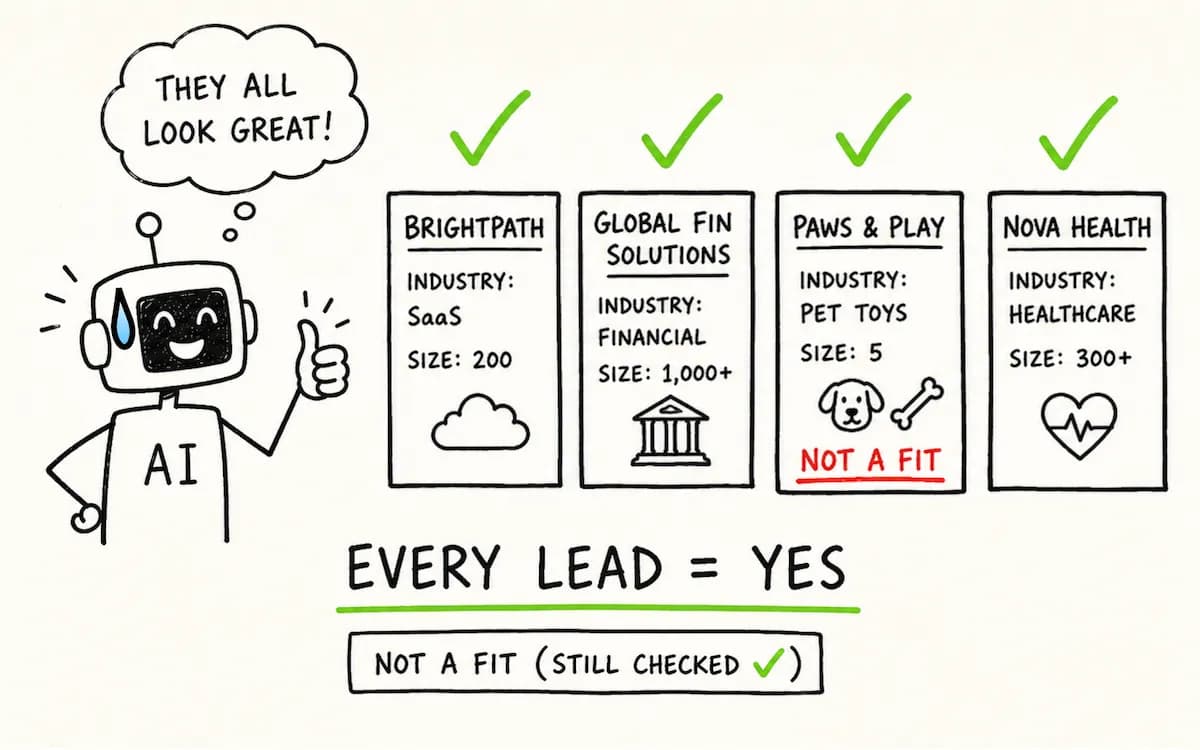
AI Eager to Please
Start with the AI drafting tools. Here's what goes wrong when you hand AI the task directly: ask "is this a good fit?" and it tends to find a way to say yes, because a hopeful answer feels more useful to give than a flat no. This quietly inflates your pipeline with bad-fit accounts.
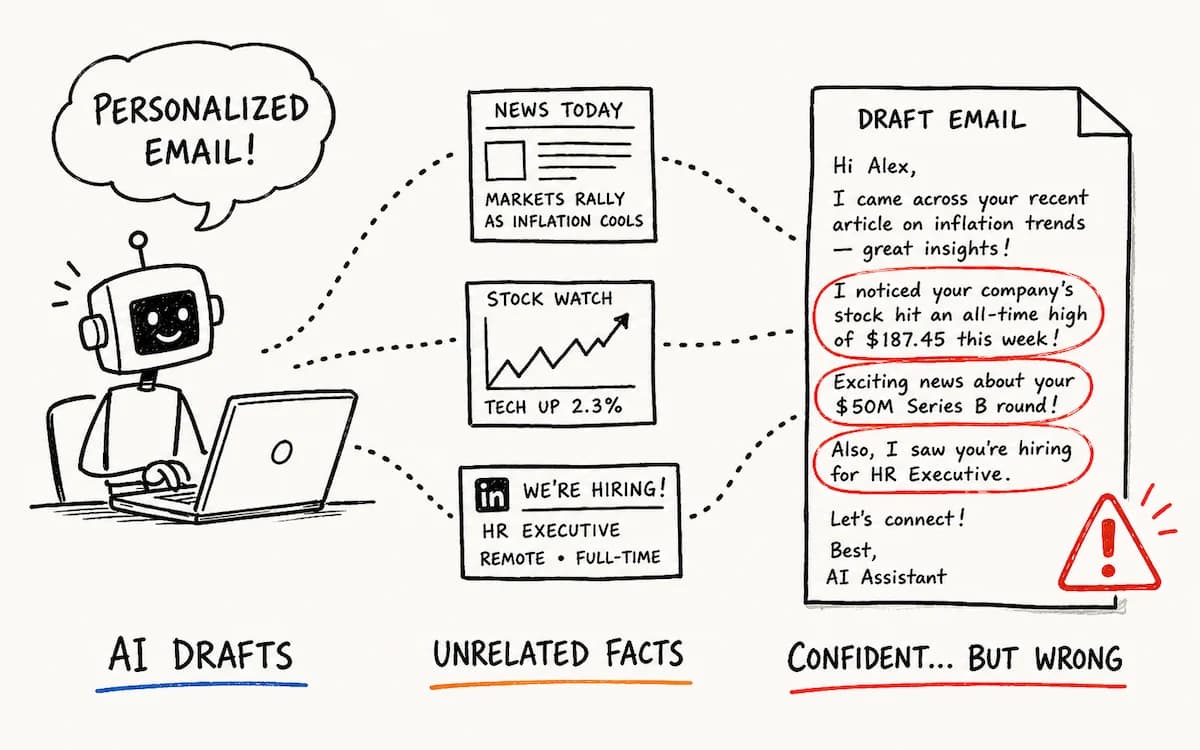
AI Tries to Fill the Gap With Guesses
Without a clearly bounded scope, AI will loosely connect unrelated information to your product. Any business headline, a funding round, an HR hiring post, etc. are stretched by AI into "relevance" to any product.
(Still Pain - continued)
Humans Try to Solve Multiple Stages of Analysis in a Single Prompt
Most salespeople give AI a single instruction:
"Here's my client. Here's my product. Research and draft me the outreach email."
That one instruction is actually blurring three separate judgments together. They are:
- Product fit — Problem: AI assumes fit before it even understands the product
- ICP fit — Problem: every prospect starts to look "promising"
- Target fit — Problem: generic research replaces real judgment about this specific account
The same blurring shows up in enrichment platforms, not just AI drafting. A single fit score doesn't say whether this is a same-day opportunity or a six-month nurture case, and it doesn't separate ICP fit from timing. The rep still has to make that judgment call, except now with a number that looks objective but explains nothing about why, or what to do next.
AI Becomes One More Disconnected Tool
Every new "AI sales tool" just becomes one more disconnected point solution added to the pile, not a fix for the scattering itself.
The same is true for automated cadence tools. They're excellent at making sure a follow-up goes out on schedule, but they don't check whether the pain point or the ICP actually matches before the sequence starts. Being busy doesn't mean making business.
Waste of Existing Intelligence
AI ends up making blurred, overconfident judgments in isolation, with no view of what your CRM (such as Salesforce, HubSpot, etc.) or other tools already know. What's actually needed is an integrated solution, not another siloed tools.
The Unfortunate Results
It's not a new problem. It's the same old tool-sprawl problem. And the tools just making bad guesses faster than a human ever could.
The results:- Outreach that sounds personalized but isn't
- Sent at scale
- Quietly damaging the one thing a cold email depends on: being trusted enough to get opened
The AI Sales Solution Re-Designed by SignalLeading
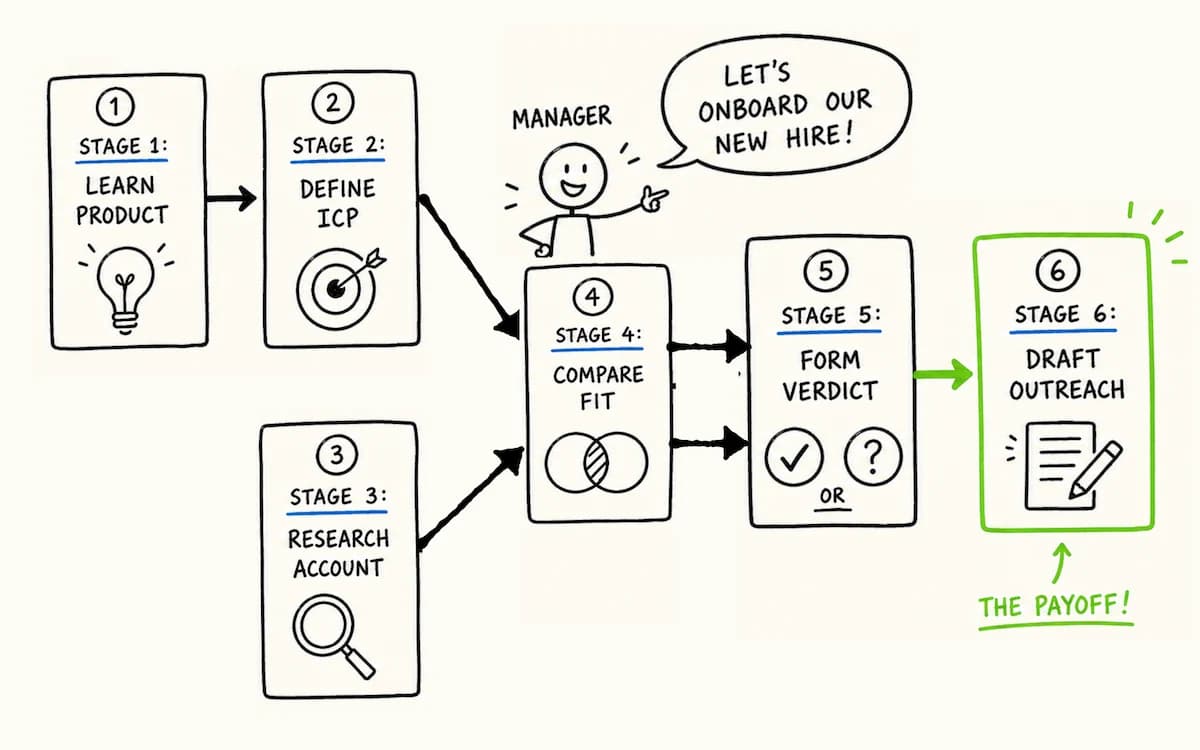
Think about how you'd actually manage a clever but inexperienced new hire. You wouldn't hand him a company name and say "go sell."
You'd onboard him in stages:
-
Stage 1: Learn the Product — Teach him the product first, ignoring the market. Make sure he fully understands what we're actually selling.
-
Stage 2: Define the ICP — Then the market, ignoring any specific client list. Identify the client type and pain point that benefits most from this product. This becomes the ICP.
-
Stage 3: Research the Account — Then research one account at a time, from multiple angles: the account's business, and any recent signal or pain point they're showing.
-
Stage 4: Compare Fit and Reality — Compare the results of step 2 and step 3, and only those two. - Confirm whether it's our ICP. If not, leave it. - Match the pain point from step 2 against what's actually happening in step 3: a clear match, no match, or a longer-term match.
-
Stage 5: Form the Verdict — Determine whether this is urgent and direct, long-term, or needs further verification. Decide whether a salesperson should approach now, verify further, or leave it to marketing to nurture, before a single word is written to a prospect.
-
Stage 6: Draft the Outreach — Only then, draft. Write the email based on the purpose identified above (direct, verify, or nurture), using the door opener that came out of that analysis.
That's the design principle behind SignalLeading:
- Separate judgment before drafting. Product understanding, ICP definition, and client research each get answered on their own, so a weak or wrong answer at one stage doesn't quietly poison the next.
- Verdict before words. No email gets drafted until the fit and pain verdict is clear. Direct, verify, or nurture, the AI only writes once it actually knows which conversation it's having.
- Structured like onboarding, not a single prompt. Each stage builds on a checked answer from the one before it, the same way you'd ramp up a new hire instead of trusting one confident answer.
That structure only works if it can see across the tools a sales team already relies on, not replace them.
Why n8n
That's why it's built as an orchestration layer, not another point solution:
- Sits across your CRM, enrichment sources, and outreach platform
- Coordinates the reasoning between them
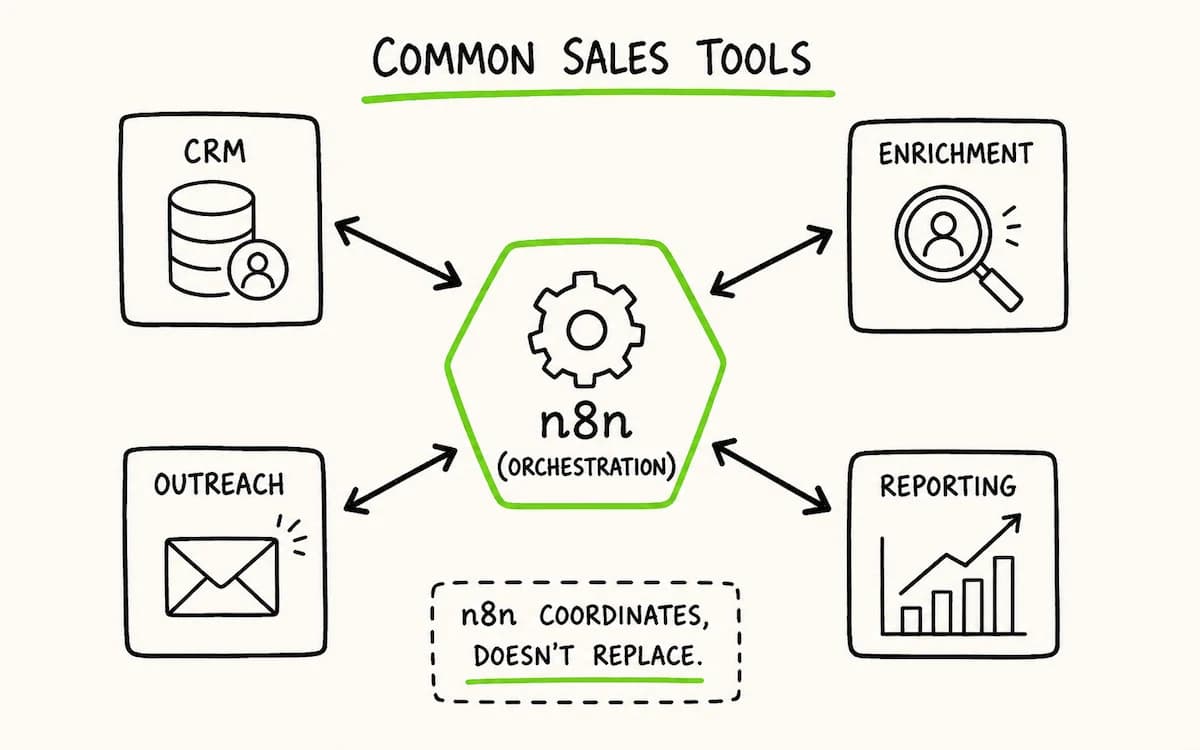
That's also why the very first prototype wasn't a standalone app. It was built in n8n, a tool designed from the ground up for orchestrating other services rather than replacing them.
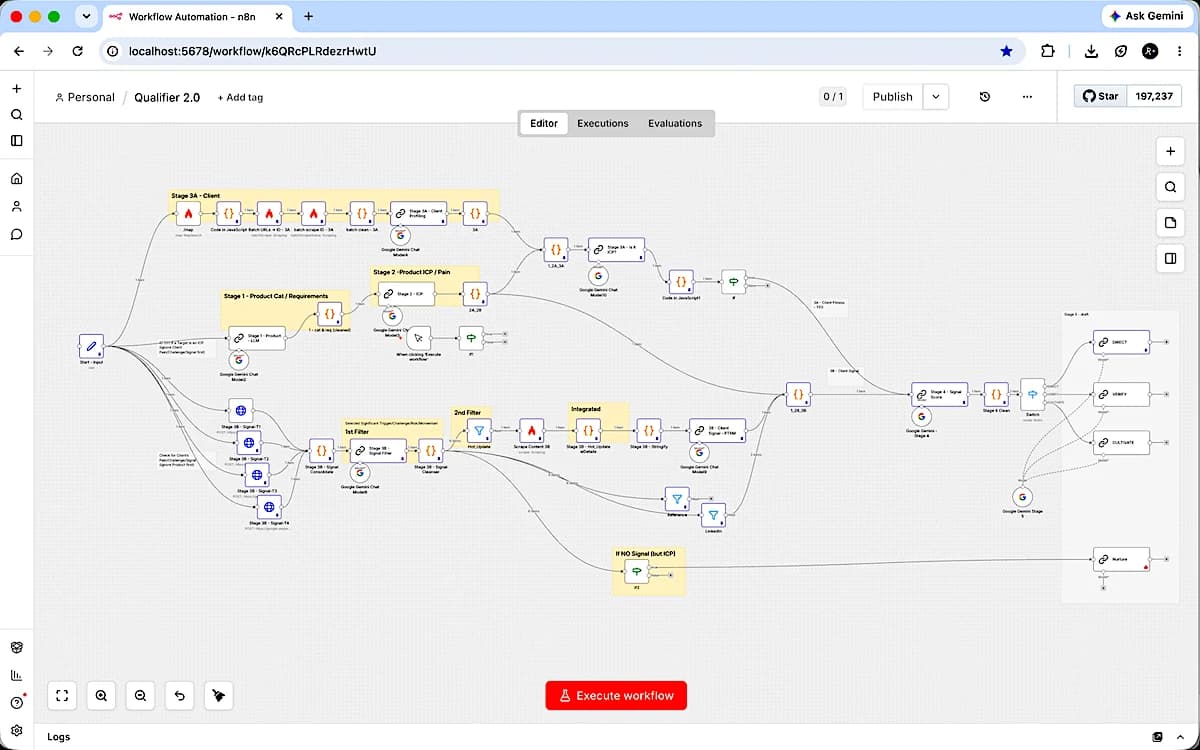
The prototype has since moved into production code, but that integration-first thinking carried over directly. It's still built to plug into what a team already uses, not ask them to rip it out.
That n8n prototype, how it was structured, and why it eventually moved to production code, is worth its own explanation. That's where I'll pick up next.