Beating Silence Trap · #1 Too Many Options
Beating the Silence Trap — Reason #1: Too Many Options
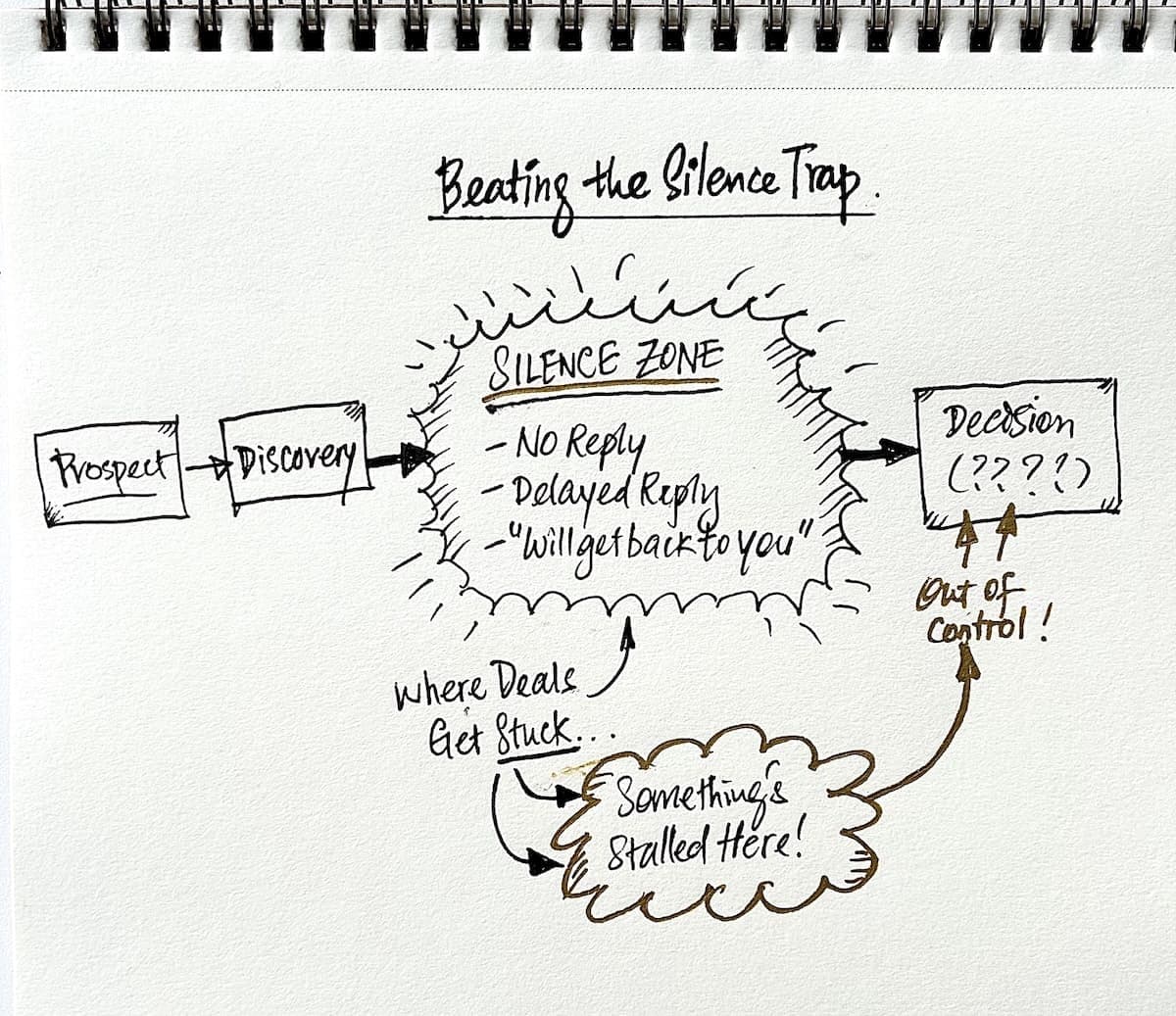
Client silence, including indecision, is the primary reason that stops enterprise deals from closing.
However, the unavoidable truth is that silence is the majority of what we encounter in sales. Frankly, silence is worse than a No.
The mindset when encountering silence is to know:
(A) When to cut and move on vs (B) When to re-engage
But most people handle it wrong. They treat it as dead and ghosting. Select "Option A". Move on to the next opportunity.
But I have seen a 12-week silence turn into $200k deals because a rep chose "Option B" and sent one more thoughtful question instead of another generic follow-up.
As long as you have validated your 3D Qualifier (HP Lesson 2) and your internal champion (HP Lesson 7) hasn't confirmed a project cancellation or a competitor win, silence at this stage is rarely a "No."
The silence trap in enterprise sales is caused by one of the following reasons. We are going to discuss them one by one.
- Clients have too many options ← This article
- Clients' fear of starting a project
- (coming soon)
- (coming soon)
- (coming soon)
Silence Reason #1: Too Many Options
Decision paralysis is real. Barry Schwartz's Paradox of Choice proves that:
More options = Lower likelihood of deciding.
Paradox of Choice
In reality, there is always more than one approach to a problem. Think of website outsourcing versus in-house development, or data encryption versus an IDP appliance. That is before you even factor in similar solutions from different vendors.
Most enterprise buyers must perform a solution comparison for every major purchase.
Choice itself is not bad, but unmanaged choice is a deal killer.
When clients are overwhelmed, they hit Choice Overload and Decision Fatigue. They stop moving to avoid making the wrong call.
Your job as a seller is to reduce the "cognitive load" on the buyer. You aren't just a vendor providing a menu. You are the expert guiding them exactly what they need and why. If not, you are slowing down your sales cycle and the deal velocity.
What to Do to Beat Silence Reason #1 (Too Many Options)
1. Reframe Your Role
Position yourself as the advisor helping the client choose the right approach, instead of just one of the options on their list. This builds trust before the sale. You are the consultant/agent who has the knowledge they need. The client does not have to do the homework because they can come to you.
You are correct. To achieve this, you need to be a diligent consultative salesperson. You need strong knowledge of solutions in the market and the technology trends.
As a professional salesperson, your daily routine should not just be engaging clients. It should include reading tech news, attending competitor seminars, studying white papers, and discussing product comparisons with your internal technical team. Focus not merely on the technical aspects, but also on the cost, maintainability, and possible alternatives.
High-performing salespeople spend 50% of their time interfacing with their accounts and 50% on knowledge enrichment.
2. Rethink the 3D Qualifier (HP Lesson 2)
Plan and execute strategically when acting as the "subject matter expert" in order to win your client.
If you master the consultative approach above, you will have no difficulty handling this part.
- If your solution lacks strengths in areas the client requires, your chance of winning is low. Disqualify it. This deal is not for you.
- If your strength is something competitors lack, convince the client that this feature is the most critical factor for project success. Keep reminding your client of these criteria.
- If your solution has a weakness that competitors are strong at, it won't be an issue as long as that feature isn't part of their core requirements. If the client asks, guide them to understand why that feature isn't crucial for their specific goal.
- If your solution has a weakness that is actually required, look for supplementary solutions, such as necessary plug-ins or additional project design. If you can't, it reflects that your earlier qualification was not sufficient.
The key is to make your solution a hassle-free choice that the client will naturally select.
3. Identify: Maximizers vs. Satisficers
I introduce another concept here: Maximizers vs. Satisficers, defined in The Paradox of Choice.
- Maximizers need to make the absolute best choice (they suffer the most from paralysis).
- Satisficers just need to make a choice that meets their criteria (they move faster).
Segment your stakeholders. Who is the "Maximizer" who keeps blocking the deal with endless information requests?
Strategically give out the information. Some reps think providing more data makes a deal easier to win. In reality, it just gives the buyer more reasons to stall. You have to narrow the aperture to guide them to a decision.
A high-performing salesperson does not give the "full category" to the client. They give them just enough to satisfy them. My boss used to call this "pinging" the client one by one to collect information.
Some sophisticated performers even skillfully hold back certain details to test if the client actually needs them. This is just one example; you can develop your own effective sales style.
The goal is to move the prospect from a "Maximizer" looking for perfection to a "Satisficer" looking for an outcome. This is the stakeholder you get the signature from.
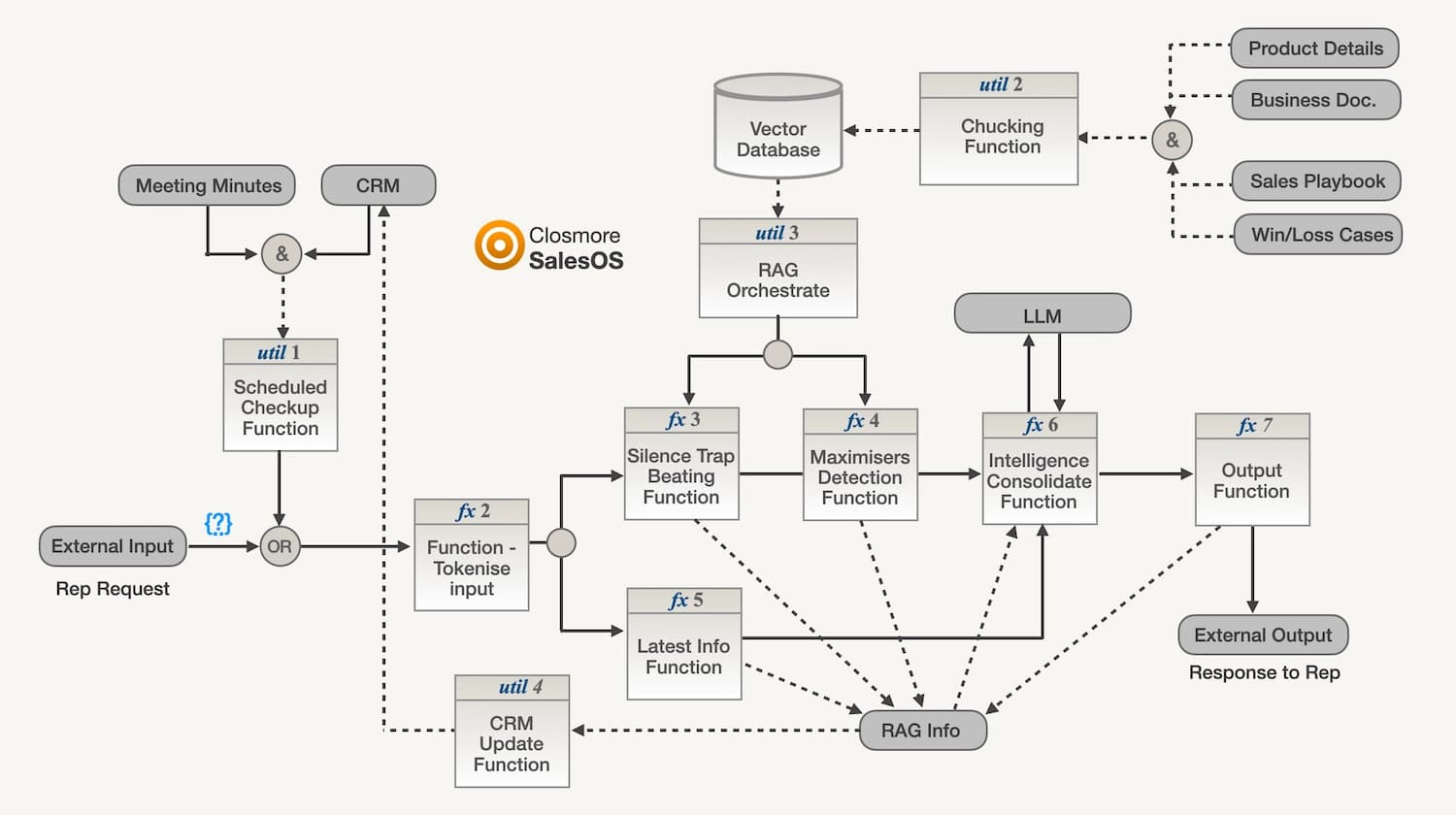
How SignalLeading Processes a Product Info Request
When a contact in an account asks for product info, SignalLeading doesn't just draft a response. It runs a contextual analysis to ensure the information provided actually moves the deal forward.
1. Data Ingestion (The Pulse)
SignalLeading continuously monitors the CRM for updates, call transcripts, and email threads. It maintains a live "Account Background" in a vector database, ensuring the AI always has the latest deal context.
2. Context Retrieval (The "Deep Dive")
When a product info request comes in, the system automatically pulls relevant intelligence:
- Account Roles: Who is asking? Is this a technical lead or a decision-maker?
- Success/Failure Patterns: What worked in similar deals, and what caused previous ones to stall?
- Market/Product Context: The latest technical specs and competitive positioning.
3. Orchestration (The Logic Layer)
SignalLeading orchestrates these data points into a coherent strategy. It doesn't just look at the request; it looks at the deal health. It identifies if this request is a "Silence Trap" in disguise or a genuine buying signal.
4. LLM Synthesis (The Human Output)
The system synthesizes this into actionable output for the salesperson:
- Strategy Brief: A clear explanation of why we are responding this way.
- Role Analysis: A breakdown of how this request impacts the key decision-makers.
- Execution Assets: Drafted emails, meeting agendas, or technical talking points ready for the rep to review.
5. System Feedback (The Loop)
Once the rep approves and sends the response, SignalLeading automatically logs the interaction back into the CRM. The system learns from the outcome, constantly refining the "Success/Failure" patterns for future deals.
Final Thoughts: Silence Reason #1 (Too Many Options)
Most of the time, the client may not be willing to show their real intentions or fears. Don't worry. As long as you can articulate the client's first question about the solution (yours or your competitors') or tech trends with a professional response, they will want to know more from you. This allows you to uncover their true decision logic and solutions in their hands.
This is why clients prefer working with high-performing salespeople. Other than that, as discussed in HP Lesson 2, the original relationship is merely nice to have, because consultative selling is what facilitates building real stakeholder trust. It comes down to active listening and the technical knowledge required to tackle tough questions.
I often see salespeople pass technical questions directly to a sales engineer or developer. Please understand: clients connect with you because they want a solution. Think of a food seller who can explain the best way to cook the meal versus one who can't. Who would you trust?
Don't be discouraged when you encounter silence. It can happen even if you have qualified the deal perfectly. In my years as a sales hunter, I have faced silence on many large deals.
When you hit silence, maintain your energy by assuming a competitor is working closely with the client. Going the extra mile isn't about burning yourself out, but executing the strategies everyone else forgot, but not you.