Stakeholder Mapping · HP Lesson 7
Beyond the Org Chart: The 6 Roles + 2 Intents Framework for B2B Sales
72% of B2B purchases today involve high-complexity buying groups (Demandbase, 2025). These groups span multiple functions: IT, Operations, Finance, and End Users.
Most sales teams focus 100% on the Decision Maker — the Decider. They treat them like the "Final Boss." They think: "If the boss says Yes, no one can say NO."
In enterprise sales, you can't be more wrong.
1. The Antagonist
In my recent "Crying Kid" story, my competitor used a personal relationship with the technical lead to lock me out. That Security Manager (SM) became my Antagonist. He wasn't the decision maker, but he had the power to kill my proposal.
If we don't handle the communication among these hidden roles, we get stuck. End up like I did, winning badly after upsetting a key stakeholder, the SM, and having to cut the margin just to survive.
2. The Coach
One of the biggest mistakes in my early career was missing the Horizontal Intents concept. While the Org Chart told me who had the title, it didn't tell me who had the intent.
In that logistics deal, the Financial Manager was my Coach.
A coach is your internal partner. They provide the "Compass" i.e., the insider info that tells you where the obstacles or even traps are hidden. My old boss at HP told me: "The first role to identify in any enterprise account is your coach."
Ensure their project success is your success. Without a coach, you are flying blind.
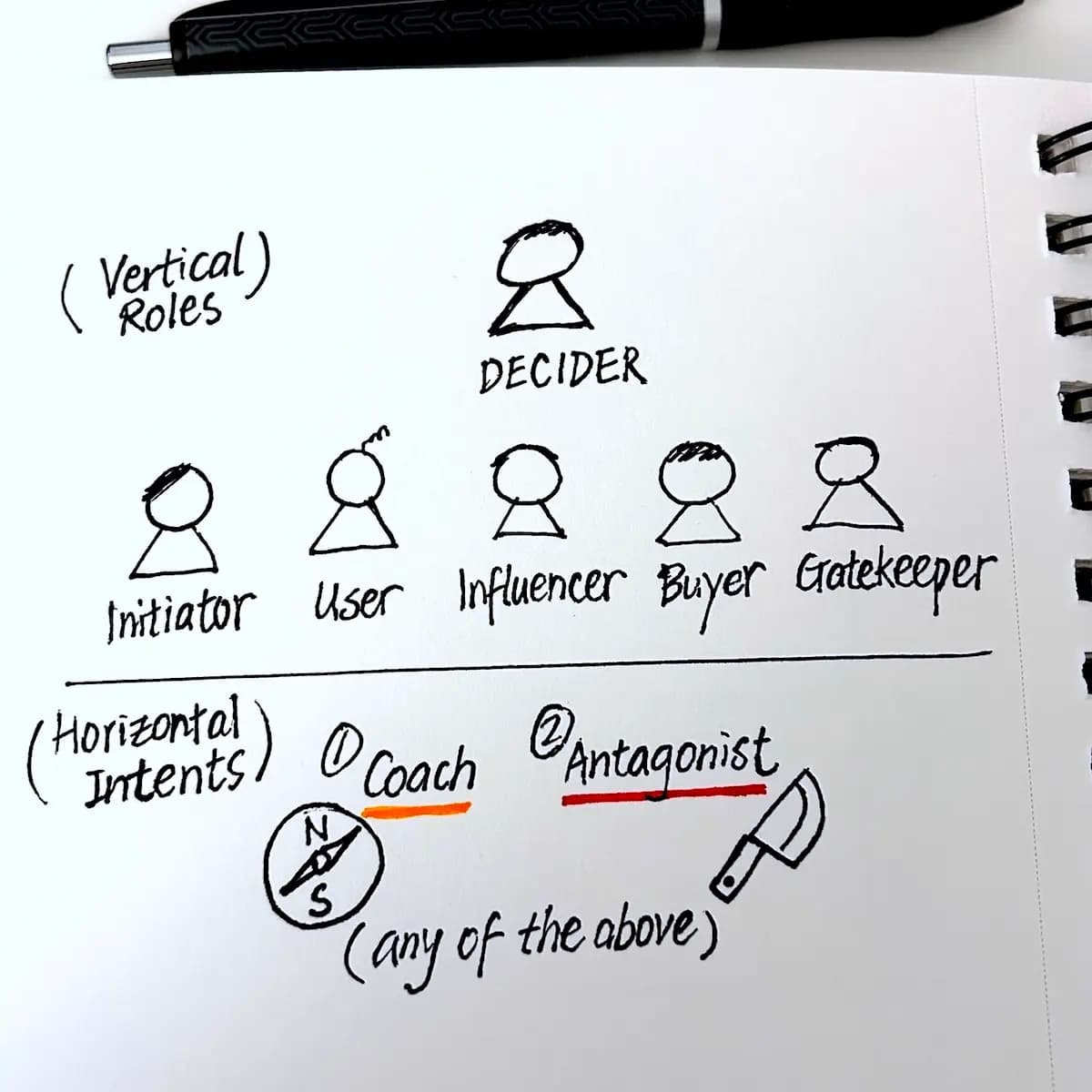
The Buying Center at a Glance
To win the "Decision Game," you need to map two types of roles:
Vertical Roles (Functional)
- Initiator: Recognizes the problem.
- User: Cares about daily functionality.
- Influencer: Technical experts who shape the decision.
- Gatekeeper: Controls information or access (often IT or HR).
- Buyer: Procurement. They negotiate the Dollar.
- Decider: The final authority on budget and selection.
Horizontal Roles/Intents (Strategic)
- Coach: Helps you navigate the politics. They provide the signal.
- Antagonist: Actively prefers a competitor or opposes change. They hold the knife.
The Coach gives you the compass. The Antagonist holds the knife. In my logistics deal, I had to use executive leverage to bypass the Antagonist, and to KO my competitor.
Full mapping framework is now live in Siganl Leading.
This framework came from a deal I almost lost — and had to recover using what I call the “Crying Kid” Strategy.
The Story behind this Framework
This framework came from a deal I almost lost — and had to recover using what I call the “Crying Kid” Strategy.
If you haven’t read it, start there.
Because without understanding the people, you’ll always misread the deal.